A long road home, from baseball fields to broken walls to hope renewed.
My son Drew is my firstborn, the one who made me a father. There’s a reverence that comes with that role—the kind that changes your heart from the inside out. I was a young man when he arrived, not yet fully shaped by life, but holding in my arms someone who would become one of my life’s greatest teachers.

“There’s a reverence that comes with being a father—the kind that changes your heart from the inside out.”
He is like me in some ways, sharp, persistent, emotionally deep, but in others, we are opposites. Drew has never been afraid to push into hard conversations. If there’s a closed door, he’ll knock and then walk through it. Me? I tend to circle it, wait, listen. I suppose that difference played a role in how everything unfolded this past year.
Drew and his wife Ellie told me in early April that they were expecting their first child, my first grandchild. I could feel the joy in Drew’s voice, the tremble of excitement and maybe just a bit of fear. I was overjoyed for them. Truly. Knowing the road Drew had walked to get to this moment made it all the more powerful.
But life has a way of layering joy and conflict on the same page.
What I hadn’t yet shared, what I had kept from Drew, from his sister, and from the rest of the family, was that I had also remarried. Quietly. To Xue, my girlfriend in China. We had made the decision earlier last year to marry in December, planning to first marry, and then begin the visa process to bring her to the U.S. Our relationship had lived across continents for several years, nurtured by trips every few months, late-night calls, and an ever-growing commitment to each other. But we chose to keep the marriage quiet, largely because we were still apart physically, and then at the end, because I didn’t want to shift focus away from the joy that was just beginning to bloom in Drew and Ellie’s life.
Then came the second shock.
Xue was pregnant too. We hadn’t expected it, not exactly, but we welcomed it with love. What I didn’t expect was that both Ellie and Xue would share nearly identical due dates. Two babies, two generations, coming into the world side by side. And now, two truths I could no longer keep tucked away.
“Two babies. Two generations. One impossible coincidence.”
Xue, ever thoughtful and protective, advised me to wait to share the news. “Don’t spoil their moment,” she said. “Think about how they’ll feel.” I understood her, and I respected her, but deep down, I knew the longer I waited, the more it might feel like a betrayal.
That moment came on a quiet day, in the form of a direct call from Drew. No dancing around it this time. “Are you and Xue married?”
There was no way around it. No softening the truth. I said yes. Yes, we were married. And yes, she was pregnant. It wasn’t a conversation I was ready to have, but it had arrived, and I had to meet it.
We ended the call on uneasy terms.
A few days passed. Then came the second call.
Drew had processed the news. He had talked with Ellie. And he wasn’t ready to talk with me further. He felt hurt, felt I had violated the trust I always taught him to value. He told me I was disinvited from their gender reveal party at the end of May. It was too uncomfortable, for him, for Ellie. I didn’t like it, but I understood. That call, as painful as it was, also moved the stone I’d been pushing uphill. It made me realize I had to face the rest of the family. I told his sister. My mom. My dad and stepmom. Then I braced for the fallout with my daughter.
Drew’s distance hurt. But I’ve absorbed a lot for my son over the years. That’s what fathers do. We carry things. We don’t return pain in kind.
Instead, I sent a few small gifts for their unborn child, tokens of love from a distance, delivered through my daughter, who flew out to Florida to attend the reveal. It wasn’t the same as being there. But it was something. A way to say: I’m still here, even if I can’t be near.
“He told me to share more of my life… but said it while shouting. Somehow, that made us both smile.”
There was a moment during those strained conversations that has stayed with me, maybe because of the irony. When Drew called, asking what I thought about a letter he had read to me on the earlier call. But so much had happened since, I couldn’t recall all the details. I think that made him angry. Our tempers flared a little as I pushed back on being cut off. We both wanted to be heard. We both felt hurt.
Then, Drew, who has grown so much in emotional intelligence, told me it was okay to call him, to share things with him. He just wanted me to be open. But he said it in a way that was anything but soft. I pointed it out, a little amused: “Son, you’re telling me to open up… while shouting at me.” Somehow, I think we both smiled. The edge softened. A moment cracked open.
He does love me. He’s said many times: “Dad, I want you to be happy.” And he was right; I hadn’t shown him the trust I should have. I apologized. I’m a private person, introverted even, and this was all hard for me to share. That doesn’t excuse it, but maybe it explains it.
Kellie, his mom, had just suffered a stroke the previous October. And here I was, remarried. Starting over. Expecting a baby. That timing doesn’t look good. I get it. I really do. But life doesn’t always let us choose the perfect time to be reborn.
The irony is that while I was working to bring Xue to the U.S., the process would now lead me first to China.
“I stood on that third base line and realized: this is the last time. I wanted to freeze it.”
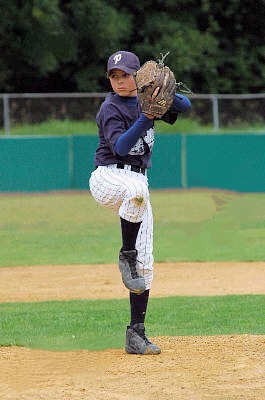
Drew’s story hasn’t been easy. He was a gifted athlete, a left-handed pitcher with a natural feel for the game. Baseball shaped his childhood. His first team, a non-competitive team, wasn’t a good fit, but soon we found a competitive league that was. From ages 8 to 12, we lived at the ballpark in the spring and summer. I became an assistant coach for his 11-year-old team, and then, his 12-year-old team head coach. We traveled for tournaments, celebrated wins, nursed tough losses. I still remember that moment, his final All-Star game, me standing at the third base coaches’ box, realizing: this is the last time. I took in the smells, the sounds, the light. I wanted to freeze time.

His peak came at 12. All winter he trained with a high school pitching coach. The first tournament of the season was a round-robin warm-up, with three-inning games—a perfect stage for his coming out party. Drew dominated. I still remember the pitch sequence against his rival, the all-star team head coach’s son: brush-back heater, strike one, another fastball inside, strike two, then a change-up low and away. Not just strike three, but a swinging strike that wasn’t even close. He owned the moment. The league was put on notice.


But youth baseball can be cruel. Politics got in the way. Coaches clashed, parents meddled. We left that team after a confrontation at a tournament game that got ugly, with me getting between my son and another assistant coach. We moved onto his 13U season. Then came the injury—a torn labrum. His fastball lost its edge. Pain crept in. Dreams faded. He played another couple of years, but it wasn’t the same for him.
What followed was something darker.
I don’t know what set it in motion. Maybe it was the injury. Maybe his mom’s health, maybe the loss of purpose. But his descent into substance abuse was real, and it stretched on for years. I won’t share all of it, it’s his story too, but I will say this: it was the hardest season of my life. Harder than losing my brother. Because this didn’t end. It dragged on. And I had to keep fighting.
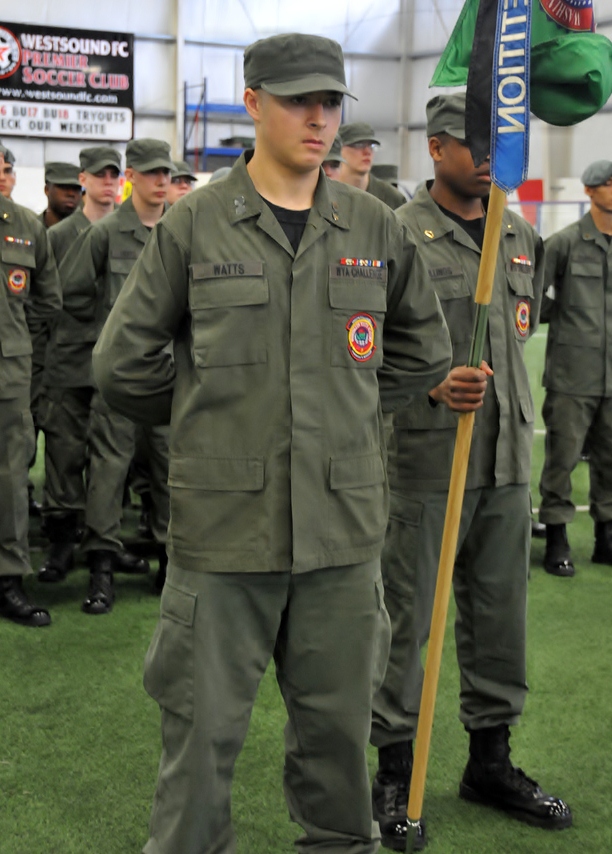
I got him into the Washington Youth Academy, a military boot camp style program from the National Guard. It was 5.5 months of structure, exercise, and learning to find success and leadership. He went in angry. Resistant. I remember him mouthing “I’m not doing this” as they led the kids away at the introduction meeting for the future cadets and their families. But I held firm. Five and a half months later, he was a commander of the 2nd platoon, The Spartans, and I saw an amazing change in my son. At graduation, he stood at the podium and gave the speech for his class. I thought the battle was won. I thought I could relax.
Two weeks later, unbeknownst to me at the time, he relapsed, the battle continued.
“I don’t take credit for the wisdom of that moment. That was divine mercy, speaking through me.”
I learned then what I believe God tries to teach all parents: you can love your children, influence them, guide them, but you cannot control them. The most shocking realization was this: my anger, fueled by heartbreak and frustration over his destructive choices, was perceived by Drew not as a sign he should change course, but as rejection, that I did not love him. That crushed me. The very emotions I thought were helping were only driving him further into the abyss.
I had to surrender him. Still fearful of what might happen, I gave him to God. I placed my trust in my Heavenly Father and said, “Lord, let Your will be done.” It was the only way I could begin to love Drew unconditionally. I started separating who he was from what he was doing. I stopped trying to fix him, worked to stop enabling him, set clearer boundaries—and focused on simply showing up, letting him know I loved him, as best as I knew how.
Things came to a head after a particularly difficult period, with a police officer standing at our door. Kellie and I were both there. The officer asked if I wanted him to remove Drew from the property. Time slowed. I didn’t answer right away. In that still moment, I felt like I was back on the third base line—another defining pause, another critical decision.
Up to that point, the conversation between Kellie and me had been clear: Drew could no longer stay. People around us had said it was time for tough love. That this was how you help. But as the moment lingered, that advice felt hollow. It felt harsh. It didn’t feel like love.
We didn’t kick him out. Instead, we gave him a choice: leave… or agree to get help.
That wasn’t my wisdom. That was divine mercy, speaking through me.
Drew agreed. Kellie found a treatment center in California. He left a few days later and by God’s grace, he stayed almost a year in a program not designed for that. It was another layer in the foundation of Drew finding his way.
One memory from those years still aches.
He was 15. We were at odds. I was exhausted. Angry. He wouldn’t get up for school. In my frustration, I pulled him out of bed. I was bigger, stronger. We wrestled and I pinned him to the wall of the hallway, forcefully. The drywall dented behind him. As soon as it happened, I let go. The shame was immediate. I had lost control. That was a line I never wanted to cross.
I knew then, I had to find another way.
“Maybe that’s why it hurts—to have disappointed the very child I fought so hard to save.”
The road hasn’t been straight. But it’s headed in the right direction. Drew is now many years sober, married, and about to become a father. He’s smart. He’s kind. He’s responsible. He is everything I hoped he would be.
Maybe that’s why it hurts so deeply to have disappointed him. I spent years trying to be the father he needed, protecting, guiding, teaching. Now I’m working to rebuild trust, not just with Drew, but with my daughter, my family… and with the generations now unfolding: my future grandson (yes—it’s a boy!), my new child, and my wife.
It’s a lot. But with God’s help, I pray I will be enough.
P.S.
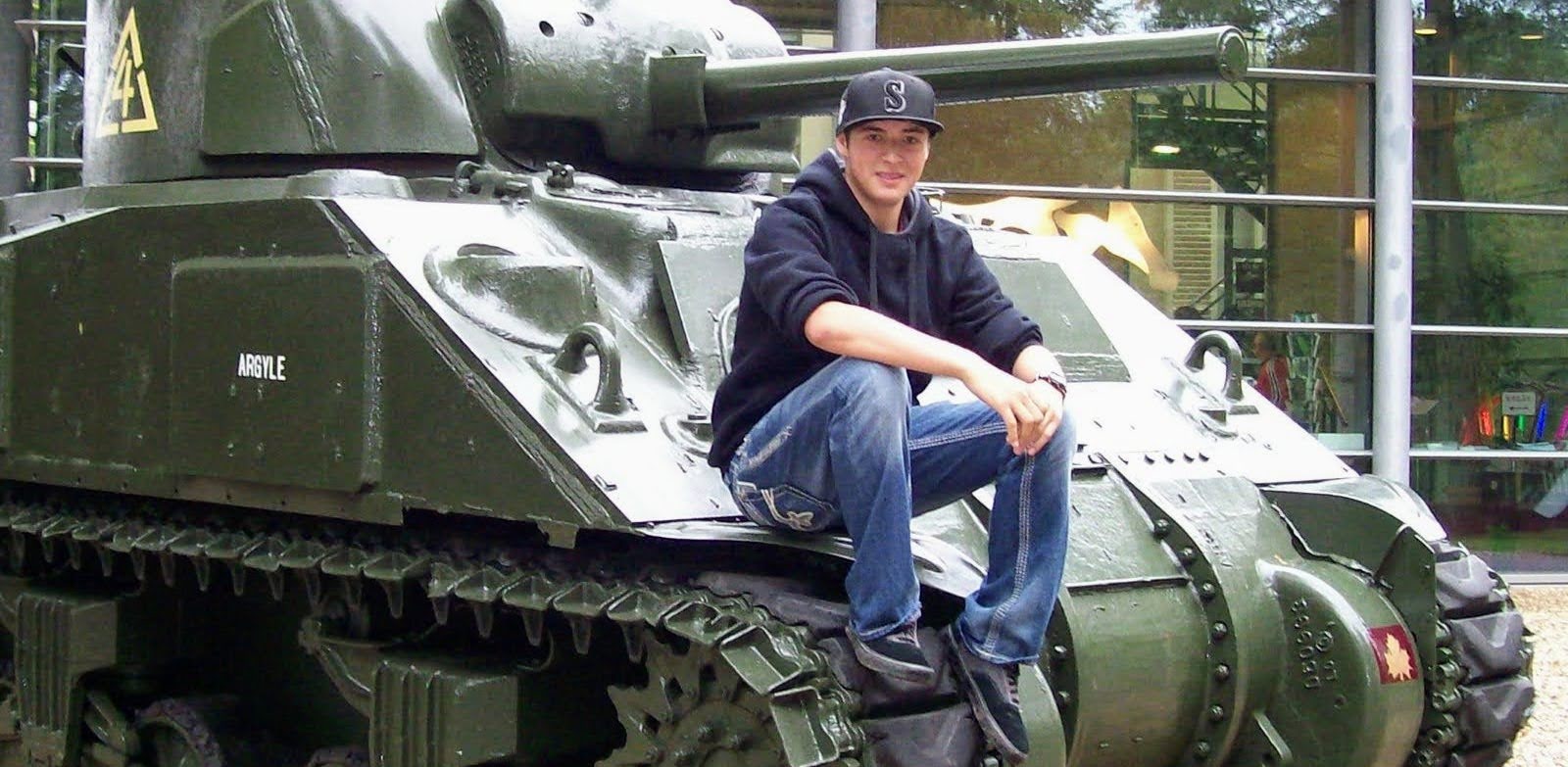
I can’t let this post end without mentioning the trip of a lifetime Drew and I took together—just after his graduation from the Washington Youth Academy. We spent nearly two weeks on what was called the Band of Brothers Tour, retracing the footsteps of the 506th Parachute Infantry Regiment of the 101st Airborne.
From Alabama to England, across the Channel to Normandy… then on through France, Belgium and Bastogne, the Netherlands, into Germany and Austria—ending at the Eagle’s Nest in Berchtesgaden. After our first full day in Normandy, we lay in bed at our hotel, a quiet French chateau, both of us still and quiet, hardly able to believe the sights we had seen on the beaches of Utah and Omaha that day, it was humbling. It was a moment of connection and awe I will never forget—a father and son, bonded not just by history, but by healing.
 Echo From The West